
On 13 September 2014, the Educational Seminar “Introduction to Bioprocessing and Biologic Medicines” was held in Dublin, Ireland, at the National Institute for Bioprocessing Research and Training (NIBRT). CYCCA was represented by the Association’s Assistant Secretary, Ms. Natassa-Revekka Theodosiou. The objectives of this educational seminar were: :contentReference[oaicite:0]{index=0}
The seminar also included a guided tour of the biologic medicines production and processing facilities.
Speakers: Dr. John Milne BSc, PhD and Dr. Darine Dempsey, PhD, Senior Regulatory Consultant, The Compliance Group.
Biotechnology is the technological application that uses biological systems, living organisms, or their derivatives to produce or modify products or processes.
The production of biologic medicines is complex, time-consuming, and costly. However, biologic medicines offer significant advantages over traditional medicines. For example, therapeutic proteins can interact more effectively with a large number of target receptors, something traditional medicines cannot achieve due to their smaller molecular structure. In addition, biologic therapies target specific malfunctioning cells (targeted therapy), unlike conventional chemical medicines that affect both healthy and diseased cells.
The cost of biologic medicines is high because they are produced from living organisms that require careful handling, as they are fragile and highly sensitive to environmental conditions. Any mistake or omission during production can destroy an entire batch and result in losses worth millions of euros for the manufacturer.
According to the World Health Organization (WHO, 2009), biosimilars are biotherapeutic products that are similar in quality, safety, and efficacy to an already licensed reference biotherapeutic product.
For any medicine to receive approval, it must satisfy four key criteria:
Biosimilar Medicines (Biosimilars):
The European Medicines Agency (EMA) notes that the biologic medicine Remicade was approved for the treatment of rheumatoid arthritis, Crohn’s disease, ulcerative colitis, ankylosing spondylitis, psoriatic arthritis, and psoriasis.
Its biosimilar versions, Remsima and Inflectra, were approved following studies in ankylosing spondylitis and rheumatoid arthritis. Their use was also approved for Crohn’s disease and ulcerative colitis; however, broader use requires additional clinical studies and supporting evidence.
By contrast, the U.S. Food and Drug Administration (FDA) stated that:
“…it could not be recommended due to differences between Inflectra and the reference product that may affect clinical safety and efficacy.”
The FDA therefore requested further research and evidence before approving its use in inflammatory bowel diseases.


Figures 1 and 2 compare the approval pathways for biologic and biosimilar medicines in Europe and the United States. In Europe, as illustrated in Figure 1, fewer clinical and non-clinical studies are required for biosimilars. Specifically, biosimilars must demonstrate that there are no clinically meaningful differences compared with the reference product, although a limited degree of variation is accepted.
This approach is based on demonstrating similarity to an already approved product rather than re-establishing safety and efficacy from the beginning.
Particular attention was drawn to the fact that significant pathophysiological differences exist between rheumatologic diseases and inflammatory bowel diseases, as well as differences in their safety profiles.
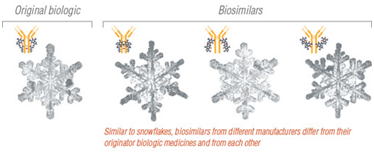
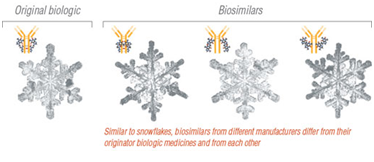
Figure 3 illustrates the concept of a biosimilar medicine: a product that resembles the original biologic medicine in many respects but is not identical.
Regarding interchangeability between biologic medicines and their biosimilars, the European Medicines Agency (EMA) has not issued specific guidelines and leaves decisions to individual member states. Each European Union country must establish its own policies on this matter.
More than twelve European countries have already introduced regulations preventing the automatic substitution of biologic medicines with biosimilars.
It should also be noted that the FDA has stated that biosimilarity alone does not make two medicinal products interchangeable.
The substitution of biologic medicines with biosimilars:
a) is generally not permitted in Europe;
b) is not widely recommended; and
c) is considered a separate issue from interchangeability.
CYCCA, based on the educational workshop organized in Dublin by the European Federation of Crohn’s & Ulcerative Colitis Associations (EFCCA) and on its forthcoming meeting with the Cyprus Gastroenterology Society, will determine its official position regarding biosimilar medicines.
* Biosimilars = biosimilar or biological equivalent medicines
** Reference biologics = original biologic medicines
References
Stay connected with our Association’s website for updates on future developments. Alternatively, you may subscribe to our newsletter to receive updates by email.
Natassa-Revekka Theodosiou
Assistant Secretary, CYCCA Board of Directors